
-
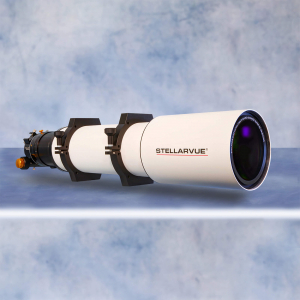
Stellarvue 5" Apo SVX127D $2495 (Save $500) -
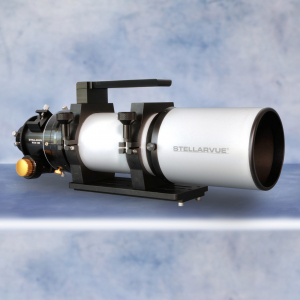
SVX090T $2495 -
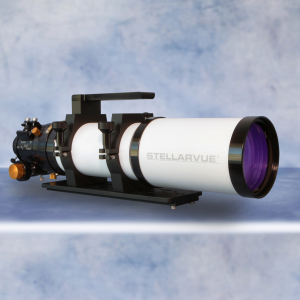
SVX102T $2995 (Save $100) -
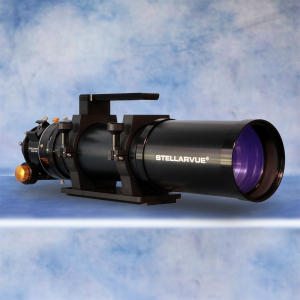
SVX102T-RA Raptor™ $3095 (Save $100) -
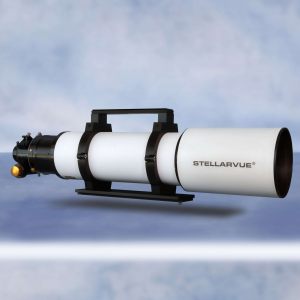
SVX130T $4995 (Save $1000) -
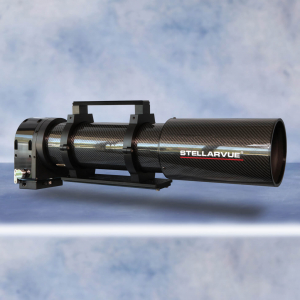
SVX130T-R Raptor™ $5195 (Save $1000) -
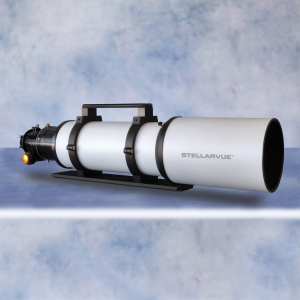
SVX140T $6195 (Save $1000) -
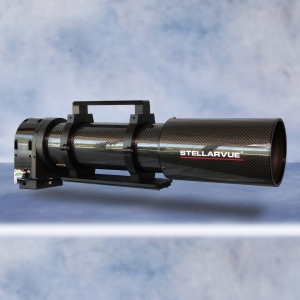
SVX140T-R Raptor™ $6395 (Save $1000) -
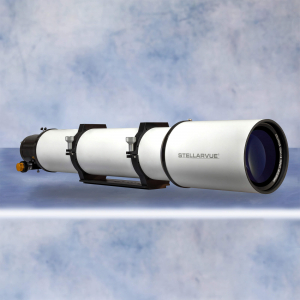
SVX152T $8995 (Save $1000) -
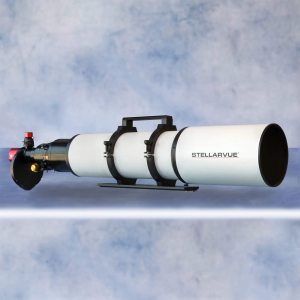
SVX180T-2 $21995.00 (Save $1000)
SVX140T - Lagoon + Trifid
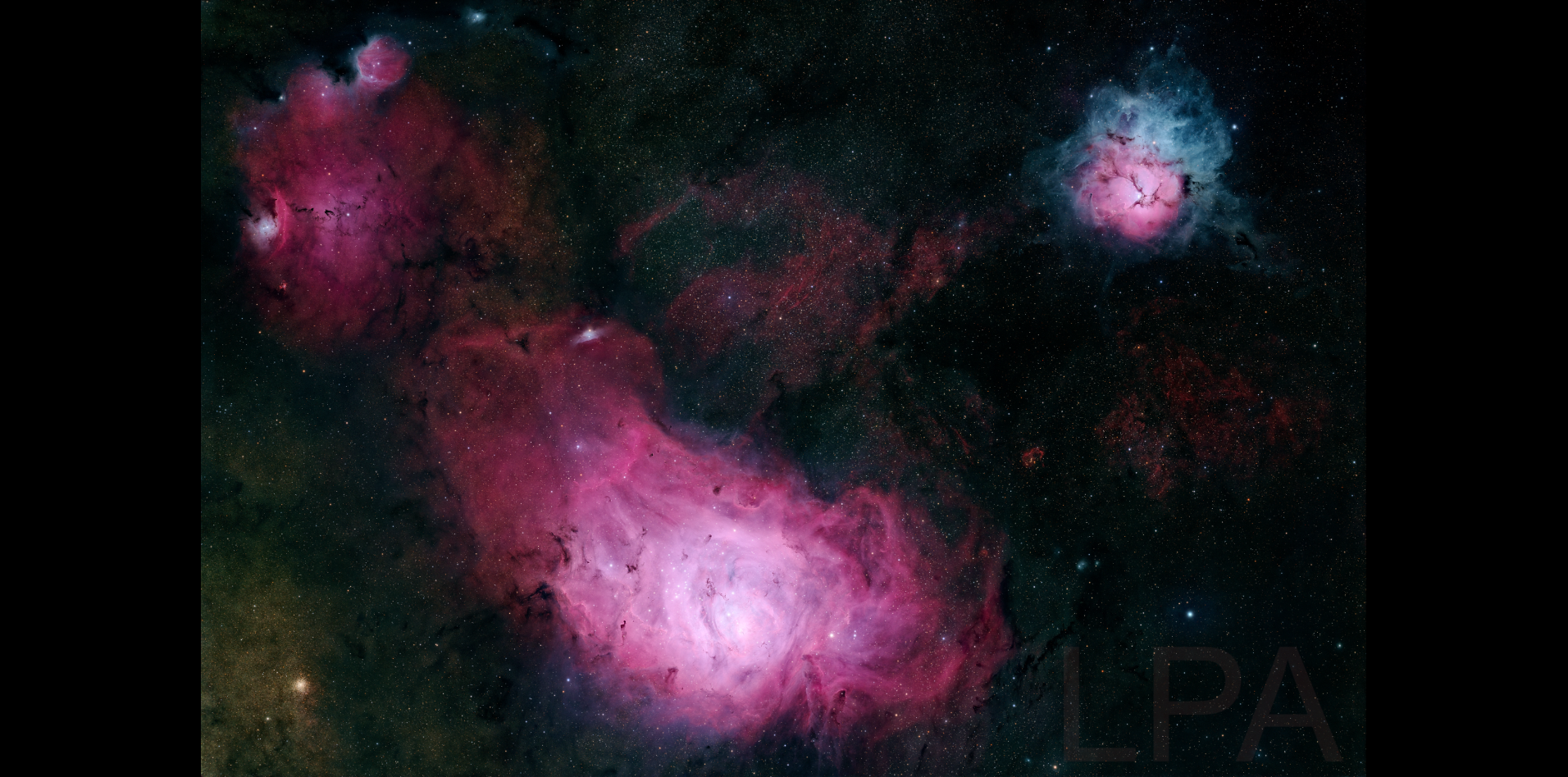
Larry Ammann captured this stunning shot of the Lagoon Nebula (M8) and the Trifid Nebula (M20) in Sagittarius with his SVX140T. Both of these objects are emission nebulae that feature glowing hydrogen gas, dark dust lanes, and young star clusters. They are located approximately 4,100 light-years away from Earth and are “stellar nurseries”, where dense clouds of gas and dust collapse under gravity to form new stars.
According to Larry: “Surely one of the most scenic vistas in the sky, this part of the Milky Way is best appreciated via astrophotography. Charles Messier and his contemporaries had no clue what a spectacular collection of emission, reflection, and dark nebulae is represented here along with a globular and several open star clusters. Included in this RGB image are the Lagoon Nebula (M8), an emission nebula glowing in H-alpha, and an associated open cluster of young stars (NGC 6530) located about 4,300 light years away. Scattered throughout the Lagoon are globules of cold, dark gas where new stars are likely in the process of forming. The small globular cluster NGC 6544 at lower left formed about 12 billion years ago in stark contrast to NGC 6530 which formed around 1-2 million years ago. Also seen here at upper left are the Chinese Dragon Nebula (NGC 6559); IC 4685, a reflection nebula with a river of dark gas traversing it; IC 1274, an emission nebula energized by the bright stars within it. The prominent emission/reflection/dark nebula at upper right is M20, the Trifid Nebula. The red of the Trifid is the glow of ionized hydrogen that is energized by the central star within the nebula. The outer blue of the Trifid is gas and dust that is not ionized but instead reflects the star's light.”
“Although there is plentiful H-alpha and OIII present in these nebulae and narrowband images can be very dramatic, I wanted to display M8 and M20 in visible light using only RGB filters to give them a softer appearance that retains detail within the nebulae. On a side note: the ability to capture all of these objects in the single FOV of a full-frame camera was the final deciding factor in why I added the SFFRX-130140 to my SVX140T.”
Other Designations:
Lagoon Nebula: M8, Sharpless 25, RCW 146, Gum 72
- M8 contains: NGC 6523, NGC 6530, Hourglass Nebula
Trifid Nebula: M20, NGC 6514, Sharpless 30, RCW 147, Gum 76
Details:
Scope: Stellarvue SVX140T
Reducer Flattener: Stellarvue SFFRX-130140 (750mm, f/5.4)
Camera: ZWO ASI6200MM
Mount: Paramount MyT (Upgraded)
Focuser/Rotator: Moonlite Nitecrawler WR35
Guider: Unguided
Filters: Chroma 50mm R,G,B
Subs:
- 49x120secs Blu
- 59x120secs Grn
- 60x120secs Red
Mount and Camera Control: TheSky64, NINA
Processing: PI, BXT, NXT, SXT, Affinity Photo 2
Location: Starfront Observatories
*For more details and an in-depth look at this image, visit Larry’s AstroBin.
References:
AstroBin. (n.d.). AstroBin. https://app.astrobin.com/i/dmasdt?r=B
M8 and M20 - The Lagoon and Trifid Nebulae. (n.d.). Copyright: Richard Powell. http://www.atlasoftheuniverse.com/nebulae/m08m20.html
Wikipedia contributors. (2026, April 5). Lagoon Nebula. Wikipedia. https://en.wikipedia.org/wiki/Lagoon_Nebula
Wikipedia contributors. (2026b, April 23). Trifid nebula. Wikipedia. https://en.wikipedia.org/wiki/Trifid_Nebula
Matthias, & Matthias. (2025, July 2). Lagoon Nebula and Trifid Nebula - Tracking the stars. Tracking the Stars - A Journey Across the Night Sky. https://trackingthestars.com/lagoon-nebula-and-trifid-nebula/


